Your cart is currently empty!
Checkout is not available whilst your cart is empty—please take a look through our store and come back when you're ready to place an order.
Summer Break Loading! ☀️ Our team will be away on summer vacation from August 12th to 19th. We wish you a beautiful and relaxing summer!

Greece’s favorite specialty drink wasn’t born in Melbourne or Oslo. It was invented right here — and with the right beans and a little technique, the freddo you make at home can beat most coffee shops. In this guide you’ll find the freddo espresso recipe and freddo cappuccino recipe exactly as we make them at our roastery.
Freddo espresso appeared in Greece in the mid-1990s, when Greeks — already devoted to cold coffee thanks to the frappé — went looking for a more “espresso-forward” summer drink. The result was something unique worldwide: espresso shaken or whipped with ice until it develops a dense, creamy texture, without watering down. Freddo cappuccino followed soon after, adding a layer of cold milk foam on top.
Outside Greece and Cyprus, almost nobody knows it. Yet whenever visiting baristas try one, the usual reaction is to wonder why the whole world isn’t serving it.
Before we get to the recipe, it helps to understand what separates a great freddo from a mediocre one: meltwater.
When hot espresso meets ice, some of that ice melts instantly. A little dilution is inevitable — and even desirable, since it opens up the aromatics, much like a drop of water in whisky. The trouble starts when dilution gets out of control: whipping too long, using too little ice, serving in a warm glass. That’s how you end up with a watery, bitter drink that barely resembles espresso.
The entire technique of the freddo comes down to one thing: chilling fast with minimal melting.
The freddo is unforgiving. Cold “locks in” flavor: the bitterness of a poor roast turns sharper, while the sweetness of a well-roasted coffee shines through.
And of course: freshly roasted, freshly ground. In a freddo, where there’s no hot steam to release aromatics, freshness matters even more.
You’ll need:
Steps:
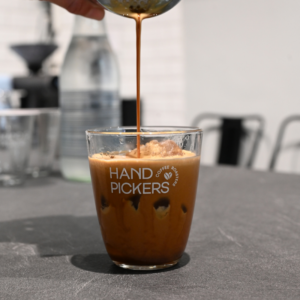
The result should carry a dense, light-colored foam on top — a kind of “cold crema” — and taste concentrated, never watery.
A freddo cappuccino is a freddo espresso plus a layer of cold milk foam. The base is made exactly as above — the craft is in the milk.
The milk: Fresh, whole, and cold straight from the fridge. Cold milk foams differently from hot: you don’t need steam, just vigorous agitation. Whole milk gives a richer, more stable foam; lighter milks produce foam that collapses quickly. Among plant milks, barista-edition oat works best.
Steps:
The classic test: if the foam holds a straw upright for a second or two, you’ve nailed it.
Once you’ve mastered the base recipe, the freddo becomes a canvas: a dash of vanilla syrup stirred into the hot espresso, a dusting of cocoa over the milk foam, or — our favorite version — a black freddo made with a fruity single origin, which needs no additions to taste like a summer cocktail.

Stories, tips and flavor – freshly served.