Your cart is currently empty!
Checkout is not available whilst your cart is empty—please take a look through our store and come back when you're ready to place an order.

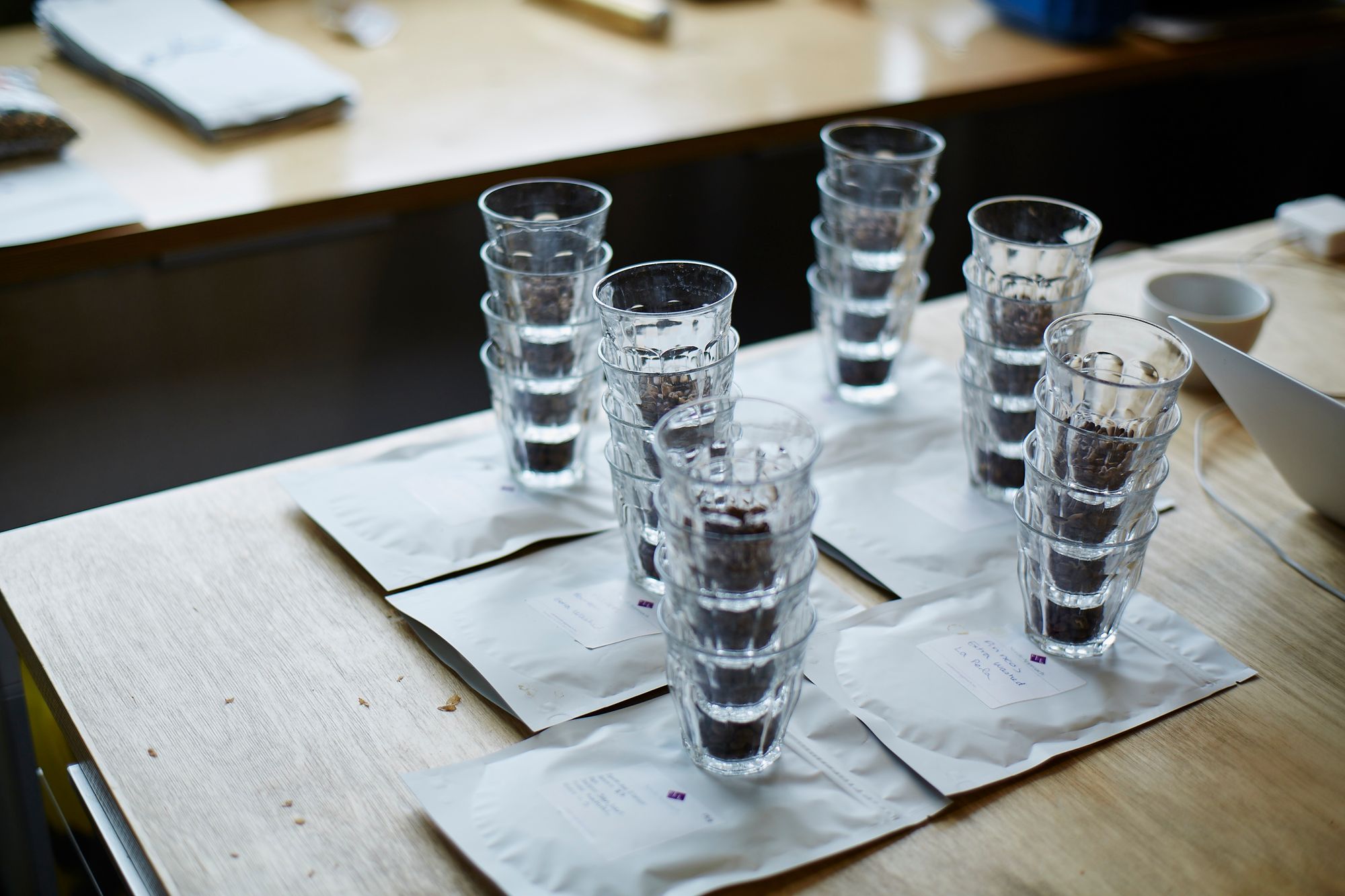
Cupping is the most widely accepted and globally recognized method for evaluating the quality of coffee. It is the “laboratory” of the coffee world, a scientific and repeatable way to taste, compare, and understand coffees under neutral, standardized conditions.
Unlike espresso or filter brewing, where extraction variables can significantly affect the result, cupping provides:
For producers, roasters, buyers, and even passionate home brewers, cupping is the foundation of quality assessment.
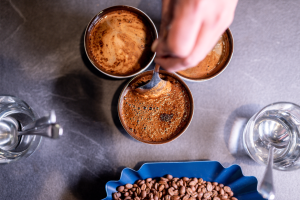
The protocol recommended by the Specialty Coffee Association (SCA) is the industry gold standard. Here’s how it’s done:
Smell the ground coffee before water contact. Note first impressions: floral, nutty, fruity, chocolaty, spicy?
Use a spoon to push the crust back. This is when aroma peaks. Take note.
Remove floating particles to clear the brew surface for slurping.
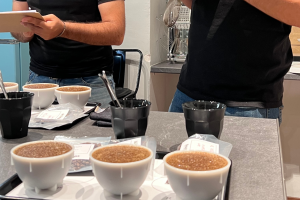
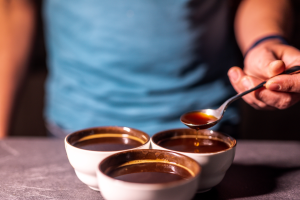
Start cupping around 8–10 minutes (temperature 65–70°C). Slurp vigorously to spray coffee across your tongue. Evaluate:
Taste again at 40°C and 25°C. Flavor clarity and defects become more visible as coffee cools.
Cupping uses a 100-point scale, typically split across 10 categories:
Each category scores between 6 and 10 points. The total determines the coffee’s classification:
| Classification | Score Range | Description |
|---|---|---|
| Commercial Coffee | < 80 | Basic flavor, possible defects |
| Premium Coffee | 75–82 | Decent daily coffee, often blends |
| Specialty Coffee | ≥ 80 | Clean cup, sweet, expressive notes |
| Very Good | 85–87.99 | Clear origin traits, complexity |
| Excellent | 88–89.99 | Competition-level, high distinction |
| Outstanding | 90–100 | Rare, world-class, micro-lots |
Specialty status starts at 80 points, as per SCA protocols.
The C-Market is the commodity trading price for standard Arabica. Specialty coffee is not priced through the C-market. It is valued based on score, quality, and traceability.
A higher score often translates into a better price for producers, better coffee for roasters, and better traceability for consumers.
Η γεύση είναι βιολογικά υποκειμενική, αλλά η εκπαίδευση μπορεί να την κάνει πιο ακριβή, πιο σταθερή, και πιο επαγγελματική.
Το SCA flavor wheel είναι θεμέλιο.
Μάθε να αναγνωρίζεις:
οξύτητα: κιτρική, μηλική, γαλακτική
γλυκύτητα: μελι, καραμέλα, φρούτα
bitter: κακάο, ξηροί καρποί
floral compounds: jasmine, bergamot, rose
Le Nez du Café, SCA kits, ή ακόμα και δικά σου από την κουζίνα:
κάρδαμο, κανέλα, μοσχοκάρυδο, μήλα, lime, berries.
Ο καλύτερος γευσιγνώστης δεν είναι αυτός που περιγράφει τα πιο πολλά.
Είναι αυτός που περιγράφει τα ίδια κάθε φορά.
Κάνε:
3 cuppings / εβδομάδα
σημείωση με αριθμούς
σταθερή διαδικασία
Πιες καφέδες με γνωστά προφίλ:
Κολομβία — κόκκινα φρούτα
Αιθιοπία — εσπεριδοειδή / λουλούδια
Βραζιλία — σοκολάτα / ξηροί καρποί
Κένυα — μαύρα φρούτα / υψηλή οξύτητα
Όσο περισσότερο γεύεσαι, τόσο πιο “αντικειμενική” γίνεται η κρίση σου.
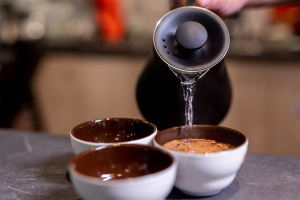
While taste is personal, sensory accuracy can be trained. Good cuppers aren’t born with a better palate; they build one over time.
Use the SCA Flavor Wheel. Learn the difference between:
Smell and taste spices, fruits, herbs daily. Build memory links.
3 cuppings/week builds your taste memory and confidence.
Great tasters are those who are repeatable, not flashy.
Each stage (hot, warm, cool, cold) tells a different part of the story.
Cupping is the universal language of coffee quality. It is how roasters, buyers, baristas, and even home brewers make sense of a complex, global product.
It is not about being a “super taster.” It is about being observant, consistent, and intentional.
And anyone can learn it.
Ready to start?
Stories, tips and flavor – freshly served.